
shell
Guest
benducket3211@gmail.com
Can a Kovar Alloy Machining Guide Help Manufacturers Achieve Greater Precision and Long-Term Performance? (6 views)
25 Jul 2026 16:13
A comprehensive Kovar alloy machining guide is an essential resource for manufacturers working with one of the most specialized metal alloys used in high-performance engineering. Kovar is an iron-nickel-cobalt alloy specifically designed with a controlled coefficient of thermal expansion that closely matches hard glass and ceramic materials. This unique characteristic makes it the preferred material for applications requiring reliable glass-to-metal seals, excellent dimensional stability, and superior thermal compatibility.
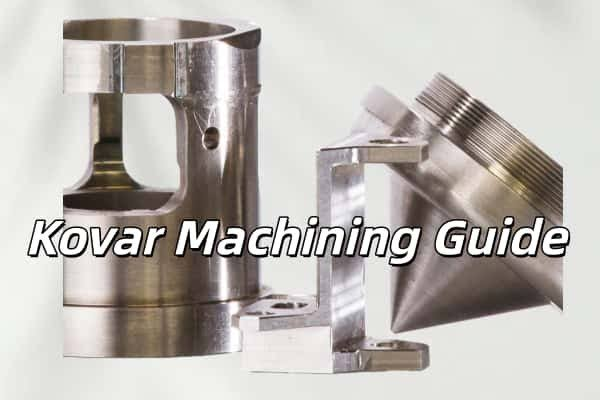
Industries including aerospace, semiconductor manufacturing, medical technology, telecommunications, defense, and scientific instrumentation rely on Kovar alloy for critical components that must perform consistently under demanding conditions. Because Kovar has unique machining characteristics compared to stainless steel, aluminum, or titanium, following a proper Kovar alloy machining guide helps manufacturers achieve outstanding precision while preserving the material's valuable mechanical and thermal properties.
Modern CNC machining technology has significantly improved the production of precision Kovar components. Advanced CNC milling, CNC turning, wire EDM machining, precision grinding, drilling, threading, and custom machining processes allow manufacturers to create highly complex parts with exceptional repeatability. By combining advanced equipment with experienced engineering expertise, manufacturers can consistently produce high-quality Kovar components that meet strict industrial specifications.
Precision Techniques in a Kovar Alloy Machining Guide
A professional Kovar alloy machining guide begins with understanding the material itself. Kovar is valued because its thermal expansion rate closely matches borosilicate glass and many ceramic materials, making it ideal for hermetic sealing applications. This property allows electronic packages, vacuum systems, optical assemblies, and semiconductor components to maintain structural integrity during repeated heating and cooling cycles.
Although Kovar offers excellent performance characteristics, machining the alloy requires careful planning. Manufacturers typically optimize cutting speeds, feed rates, tooling materials, and machining strategies to reduce heat generation while maintaining dimensional accuracy. Proper machining techniques also help minimize tool wear and improve surface finish quality.
CNC milling plays an important role in producing precision pockets, slots, mounting surfaces, intricate contours, and complex geometries. Multi-axis CNC machining centers provide the flexibility needed to manufacture highly detailed Kovar components while maintaining tight tolerances. Precision CNC turning complements milling operations by creating shafts, bushings, rings, threaded components, cylindrical housings, and custom rotational parts with excellent dimensional consistency.
Wire EDM machining is frequently included in an advanced Kovar alloy machining guide because it enables manufacturers to create intricate profiles and fine features without placing excessive mechanical stress on the material. This process is especially valuable when producing delicate components for aerospace, medical devices, semiconductor packaging, and scientific equipment.
Surface finishing also plays an essential role in precision Kovar manufacturing. Polishing, grinding, stress relieving, heat treatment, brazing, welding, nickel plating, gold plating, and passivation help improve corrosion resistance, electrical performance, mechanical durability, and overall component reliability.
Industrial Applications Covered in a Kovar Alloy Machining Guide
A detailed Kovar alloy machining guide highlights the broad range of industries that depend on precision-machined Kovar components. Aerospace engineering represents one of the largest application areas because aircraft electronics, satellite systems, communication equipment, avionics, and sensor housings require exceptional dimensional stability during temperature fluctuations. Kovar provides reliable performance under demanding environmental conditions while supporting long-term operational reliability.
The semiconductor industry also relies heavily on Kovar alloy machining. Integrated circuit packages, chip carriers, vacuum chambers, semiconductor housings, electronic feedthroughs, and precision electronic packaging all benefit from Kovar's controlled thermal expansion. Accurate machining combined with stable material properties helps protect sensitive semiconductor devices from mechanical stress and environmental contamination.
Medical technology manufacturers use precision-machined Kovar components for imaging systems, laboratory equipment, implantable electronics, diagnostic instruments, and advanced healthcare devices. Tight manufacturing tolerances contribute to dependable performance while supporting strict quality standards expected within the medical industry.
Optical engineering applications require materials capable of maintaining precise alignment despite changing temperatures. A Kovar alloy machining guide often discusses optical mounts, laser assemblies, infrared systems, photonics devices, and scientific instruments where dimensional stability directly influences overall performance. Precision-machined Kovar parts help maintain optical accuracy during continuous operation.
Defense manufacturers also depend on Kovar alloy machining for military communication systems, radar equipment, surveillance technologies, aerospace defense electronics, and specialized instrumentation. These demanding applications require materials capable of maintaining structural integrity while performing reliably in challenging operating environments.
The electronics industry frequently incorporates precision-machined Kovar into hermetic electronic packages, connectors, microwave assemblies, vacuum systems, and specialized electrical components. Consistent machining quality helps ensure long-term reliability for sensitive electronic equipment operating under extreme conditions.
Manufacturing Excellence with a Kovar Alloy Machining Guide
An effective Kovar alloy machining guide emphasizes that successful manufacturing begins long before machining starts. Engineers first review customer drawings, functional requirements, material specifications, dimensional tolerances, and production objectives to develop the most efficient machining strategy. Careful planning minimizes production challenges while maximizing quality and manufacturing efficiency.
Modern CNC machining centers deliver exceptional repeatability when producing precision Kovar components. Skilled machinists carefully monitor spindle speeds, cutting depths, coolant application, and tool conditions throughout every machining operation. These process controls help reduce thermal distortion while preserving the alloy's unique expansion characteristics.
Secondary manufacturing operations further enhance component quality after primary machining has been completed. Precision grinding improves dimensional accuracy, while polishing creates smooth surface finishes suitable for demanding sealing applications. Heat treatment and stress relieving reduce internal stresses, while plating processes improve corrosion resistance and electrical conductivity when required.
Quality assurance remains one of the most important sections of every professional Kovar alloy machining guide. Manufacturers use coordinate measuring machines, optical inspection systems, dimensional verification, hardness testing, material certification, leak testing, and surface finish analysis to verify that every finished component satisfies customer specifications. Comprehensive inspection procedures help ensure consistent quality across prototype production, custom manufacturing, and large-scale manufacturing programs.
Flexible production capabilities also allow manufacturers to support low-volume prototypes alongside high-volume industrial production without sacrificing machining accuracy. As industries continue advancing toward smaller, more sophisticated electronic and mechanical systems, precision Kovar machining remains an increasingly valuable manufacturing solution.
Conclusion
A well-developed Kovar alloy machining guide provides manufacturers with the knowledge required to produce high-quality components that combine precision, thermal stability, and long-term reliability. From aerospace and semiconductor manufacturing to medical devices, defense systems, telecommunications, and scientific instrumentation, Kovar continues to be one of the most trusted specialty alloys for demanding engineering applications.
By combining advanced CNC machining, precision milling, CNC turning, wire EDM, specialized finishing processes, and comprehensive quality control, manufacturers can consistently produce precision Kovar components that meet the highest industry standards. Companies seeking dependable, accurate, and high-performance metal components can rely on the principles outlined in a professional Kovar alloy machining guide to achieve exceptional manufacturing results and long-lasting product performance.
43.242.176.123
shell
Guest
benducket3211@gmail.com